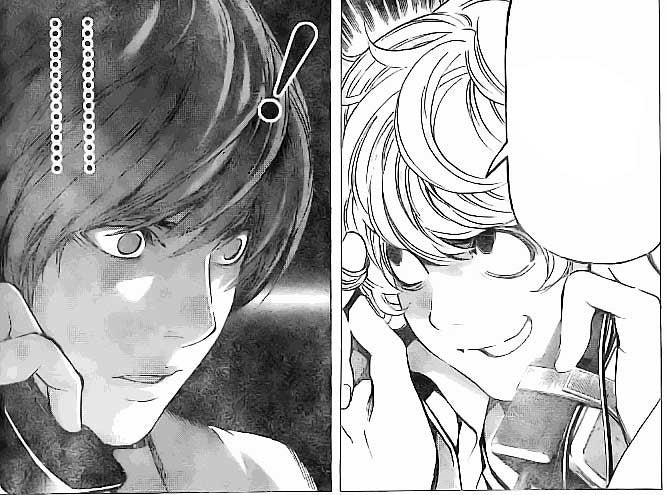
Getting on my dramaturgy high horse here, I think the western team really doesn't know who their audience is or why they are into the show. At least, from my perspective, aside from the Jeremy Jorden fans, I saw a lot of people agreeing with Light! Yes, our justice system IS fucked up and needs fixing! Yes it is absolutely awful to be a teenager with no power in the world watching everything fall apart around you and feeling like the adults refuse to do anything about it! The show is a teenage power fantasy, we all have thought about being Light. We all have thought even for a moment about if any good would come from just killing a few specific awful people. The young people yearn for revolution.
The audience for this show isn't just people who like Death Note, it's all the young people who also wish they could cause real change in the world, and have a black and white view on morality. It's a power fantasy and a cautionary tale.
I want to grab the creative team by the shoulders and ask do you care about the story you're telling? Do you care about the policial weight of this show? Your audience sure does! Why is this all about love now? It's about death! Death! Note!
Unfortunately, since my channel was deleted, I don't have access to these comments anymore, but I remember them vividly.
We want to feel like we could be Light! Like we want to be Light! We want to be on his side for a little, feel the moral debate. We want dark morbid plots that reflect our dark morbid thoughts.
The musical version has a unique theme: morality does not exist in nature, and is invented by human society.
This starts with Ryuk, who tells Light explicity "Heaven and Hell aren't real, you all go to the same place". Whether this is true in other Death Note canons is a little fuzzy. It isin the rules that the owner of the Death Note cannot go to either, but here it is everyone, always. They do not exist. Additionally, more point is made that the shinigami are neutral beings, and making any motivated killings is against their rules, it will even turn them to dust. The universe is neutral. Morality is an invention. Light ignores this.
L knows, though. From the Japanese version of Unwavering Truth, he says that gods of death might exist, but they do not judge life or death. To judge life is human. Of course, this line isn't in the Enligh version.
But the clearest depiction of this theme is the finale, Requiem:
Sleep now, here among your choices
Then drift away
Hear now how the world rejoices
Shades of grey
Gone who was right or wrong
Who was weak or strong
Nothing left to learn
Feel every gentle breeze
Whisper through the trees
As the seasons turn
Souls sing their oratory
Fading west as they fly
Tales full of fleeting glories
Stories old as the word "goodbye"
Ah, old as the word goodbye
This is my favorite Death Note adpatation, because I think it does the best job of really humanizing the morality at play here.
Starting from Where is the Justice, we hear how the students are affected by the corrupt justice system. Not far into the show we meet Sayu, Light's younger sister, who idolizes him. She is in the anime/manga, but is either background plot or a pawn to be kidnapped. In the musical, she gets to actually talk about the Kira case, and how she thinks Kira is just a bully who should be nicer, like her older brother! I love the dramatic irony on display, and Light absolutely HATES it. We All Need a Hero is Sayu's song about how good and strong her brother is, compared to awful people like Kira, and it's simutaniously Misa's song about how good and strong Kira is. They's both singing about the same person, but they have no idea, and Light wants to sink into the floor! Perfect.
Another of Light's family gets a lot more to say here, his father Soichiro, the police chief. In Act 1 he gets There Are Lines, his response to L's questionable morals and Kira's killing spree. Light plays along, cleverly showing how his father's strong sense of morality and no-nonsense lack of mercy shaped his own morals and led him down this path. They both agree, you don't kill someone for no reason, but Light sees a reason and justification for what he's doing. In the Japanese version, this song ends with:
Soichiro:"Be like God"
Light:"I will be God!"
And it's very clever! I like seeing how Light's morality was formed by the system around him. He is not anything special, it's all been coincidence. His black and while morality already exists within his father, and much of society.
Soichiro also gets a lovely sad song much later in the show, Honor Bound, where he wonders if it could be true that Light really is Kira, and how he would blame himself. Lovely little voice crack and sob at the end from a character who has been so stern and composed.
Going back to Sayu and Light's conversation about Kira, it starts because Misa makes a dedication to Kira at the beginning of her song. It's only really briefly mentioned, but I would like to pay more attention to how celebrities get involved with politics, how people judge them for who they support, and what responsibility she has for publicly supporting a controversial figure. I just wish there was some moment where another character talks about this effect, like Sayu later on or one of the ensemble who are Misa's fans.
Other adaptations are so focused on the mind games of it all, but here, the way that Light's actions affect the average person, especially his family for those emotional stakes, is forefront. It's the value of this format, a musical is a very natural way to show a character's inner emotions. If the musical was, proportionally, the same amount of mind game battles as the anime or other movie versions, it would be very cold. The real stakes are how it affects people.
Obviously, the gods of death can't look like they do in the manga, anime, or live action films. People have created some pretty damn impressive cosplays! But they wouldn't be very possible to act in, nor very easy to get in and out of for each show. This means the costume designers have a fun challenge, and the actors and directors have a new challenge: how to get their larger than life appearances and supernatural abilities across with acting and stagecraft. With Rem this ends up fairly simple, she's always very reserved. With Ryuk however, it's a wildly different angle, it's insane, and I love it!!!
One of my favorite things about the Japenese productions is that Ryuk is able to interact with the stage as a stage while the rest of the characters are stuck within their world of the show. What do I mean?
The best example is, the set piece representing Light's room is a simple desk and doorway. There's a door in the frame, but no walls around it. Pretty standard in the theater, we're used to this suspension of disbelief and we know that in the world of the show, this is a normal room with walls. Unless you're a shinigami! Of course, they can go through walls! Ryuk happily goes in circles between the doorframe and the wall next to it, walkingt hrough the invisible wall built out of our acceptance of the stagecraft. But it's not there, so the physical actor just dances through!!!
There are a couple other great moments of this. Ryuk will "pull" pieces of the sets in and out, or "raise" the curtain. He's aware of the turn table and will purposefully use it to make an entrance, or trip on it when it moves too fast. He interacts with the conductor, who throws him an apple. He isn't quite fully fourth wall breaking, but you still get a sense that he is living in a different, hightened reality than the human characters.