The Mysterious Stranger

Welcome to the Mysterious Stranger

"I am but a dream—your dream, creature of your imagination. In a moment you will have realized this, then you will banish me from your visions and I shall dissolve into the nothingness out of which you made me . . . ."

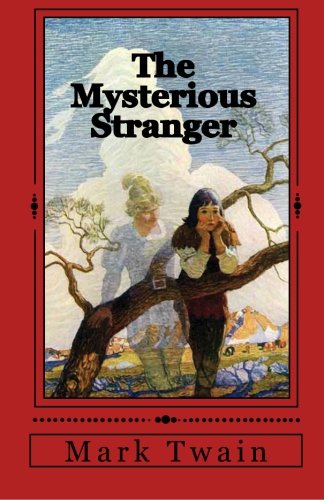
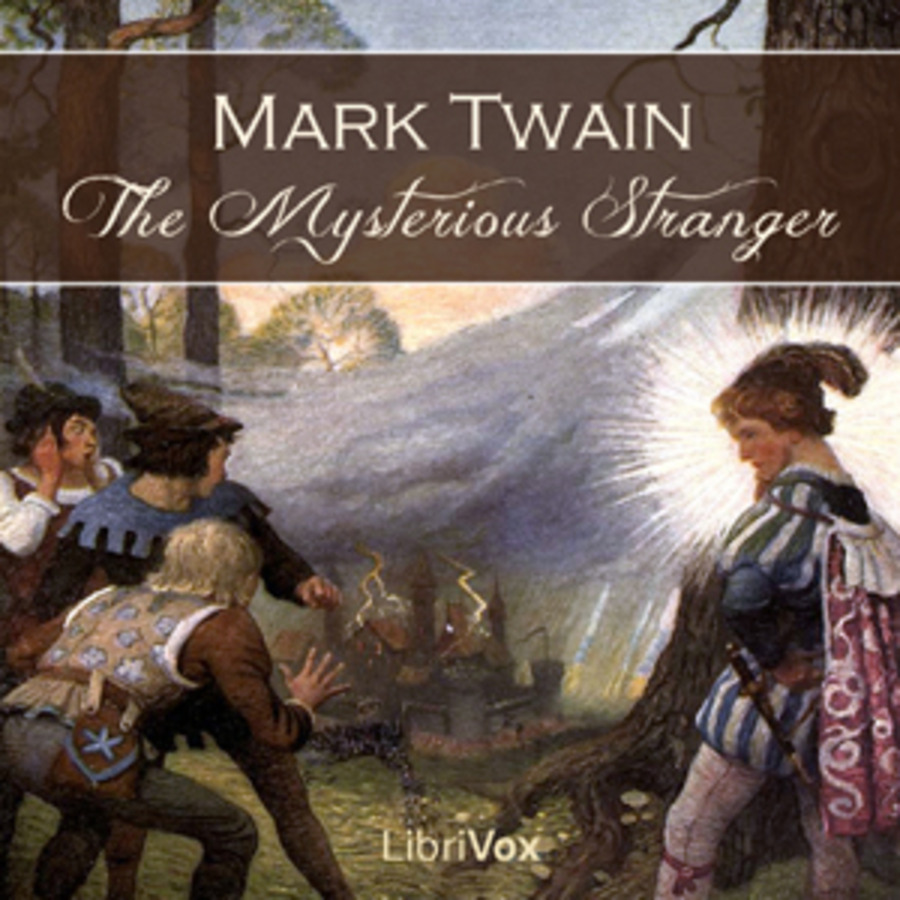
No. 44 The Mysterious Stranger is a book written by Mark Twain near the end of his life. In fact, it was not published before his death, and it was left up to his friends and the organizers of his estate to comb through his leftover maniscripts. Thing is, they didn't really like this one. It was pessemistic and confusing, plus heavily critisized Christianity, going as far as to say the whole idea was rediculous and that God didn't exist. So they took some of the plot form an earlier, unfinished draft, changed some charcaters, slapped on the ending of the most finished draft, and called it a day and hoped no one would notice. This version is known as just The Mysterious Stranger (minus the "No. 44" at the beginning). Wikipedia dubbs this the "Paine-Duneka text of 1916" and while it is in public domain, making it the most accessbile version of the story, it's estimated that only a quarter of it can be considered Twain's original work.

The original manuscripts were later discovered with the newer names of the characters crossed out and replaced with the old ones, written in Paine's handwritting.

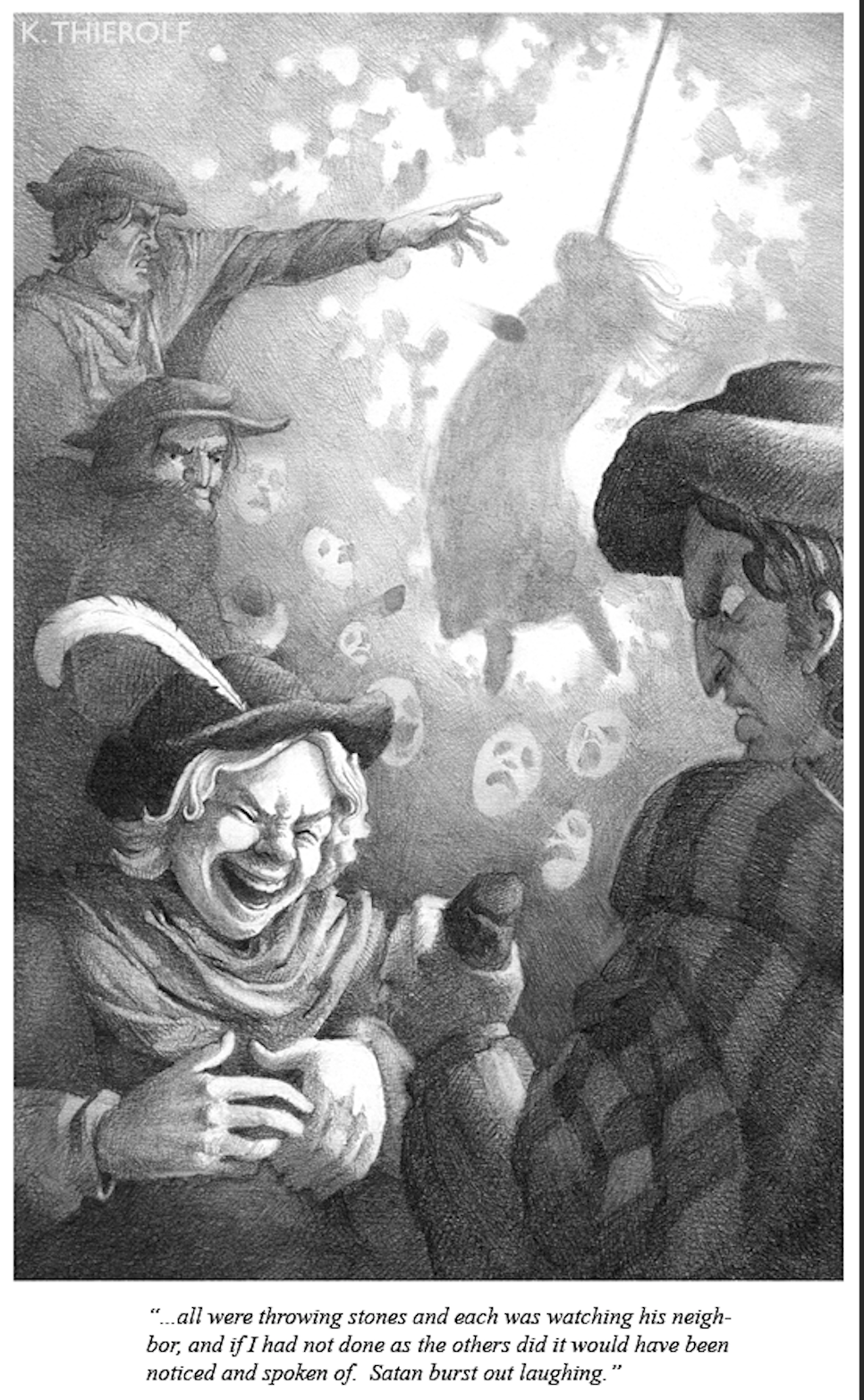
It's very easy to tell the difference, the first (fraud) eddition stars a teen boy named Theodor who, along with his two friends, is visited by a mysterious teen boy who calls himself Satan or Phillip Traum. In the real version - called "The Printshop Version" - a teen boy named August is visited by a mysterious teen boy who calls himself No. 44. The stranger here plays a similar role, though Satan is far more meanspirited and 44 just seems completely unaware, and as mentioned above, they both end with the exact same chapter.

If you recognize the background, yes this is indeed the "scariest scene in a kids movie" claymation animated Satan!

I will talk more about it in my review of the movie, but essentially, the movie is a fairly dark experience of Twain's later life. The death of his wife and sister, his failing health, and his identity as a writer. It explores his own writings of a second "Twain", an alternate side of himself. The Mysterious Stranger being the last book he wrote before his death, and never finished or published, means it plays an important part in the film.

More Links

No. 44, the Mysterious Stranger (real version) - (1982)

This book is so much weirder than you expect it to be. It's also a lot more agnositc and critical of religion than you'd expect from what we imagine Twain to be. In between the hijinks and the magic is an internal conflict between no longer trusting the institution of religion and the soul-crushing anxiety of what that means for your existence and beyond. 44 points out all the loopholes, asking why good people have bad things happen to them, why it matters how long we live on earth if the afterlife is eternal, how people can do awful things in the lord's name. But August remains steadfast in his belief, up until the end.

Twain wrote the majority of the work after his wife and sister died. He threw out many different drafts, and ultimately it was never finished. Mark Twain was born on the year Hailey's comet passed by, and he always said he would die when it returned. He was right.

To me, it feels like a very personal debate of ones own belief. One we weren't necessarily meant to read. Even this new edited version feels incredibly unfinished.


Many people who have only seen the Stranger sequence from the claymation movie take it to be a brutal and isolating view of the world. Nothing matters, if there is a god they do not have a sense of morality nor care at all for us. But I like to think of the nihilism as a little more hopefull. Reality is a dream. We have power over it. So why should we create a world with so much hate? Dream other dreams, and better ones!

The Mysterious Stranger (fraud version) - (1916)


This the version that the Adventures of Mark Twain Stranger is based on, and the version now in the public domain, so you will see it around a lot more often. Even if it is now considered only partially Twain's writing, there are still some moments in this book that I find super interesting.

The main character here is Nikolas, the Stranger is called Satan in this one, though he claims its a family name and asks to go by Phillip Traum in front of others. Surprisingly, he does a little less flaunting of his powers here, and tends to be more subtle.

The one section I will never forget is when Satan tells Nikolass that one of his friends will die in a month, and the boys are wracked with constant guilt over every wrong thing they'd done to him and devote that month to doing everything he asks, all while unable to tell him.

This version ends suddenly with the same final chapter that was intended for the real one. It feels much more out-of-place here. Satan still makes claims that religion is hypocracy and lies, but given his mean-spirited nature and the appearance of a real good priest in the story, the message falls flat, and the ending means nothing.

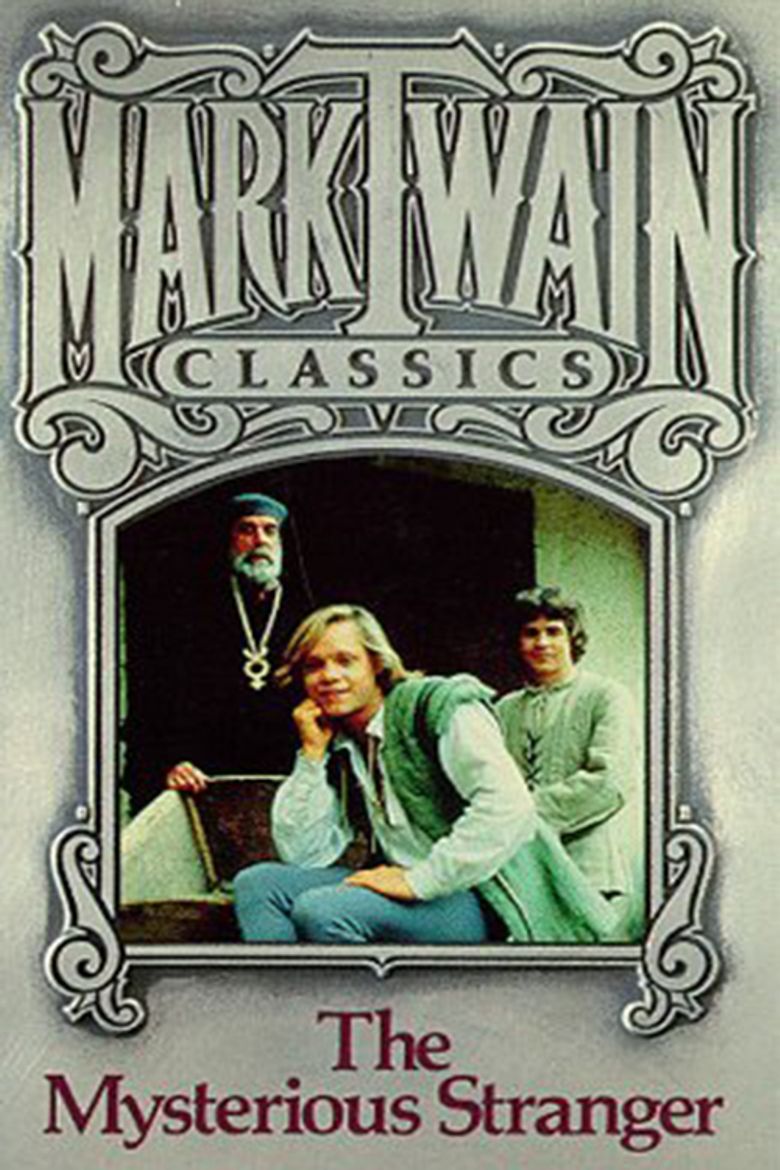
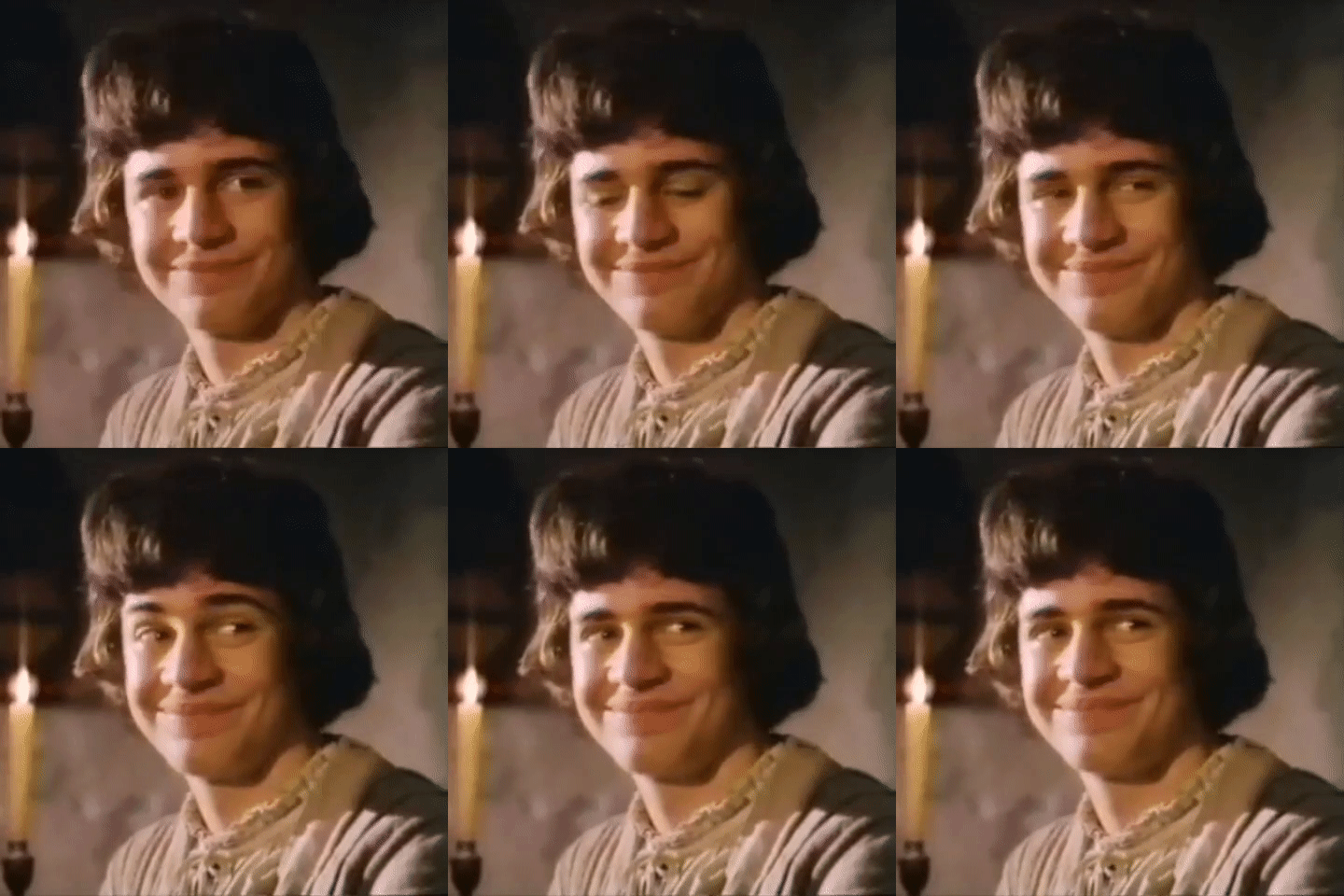
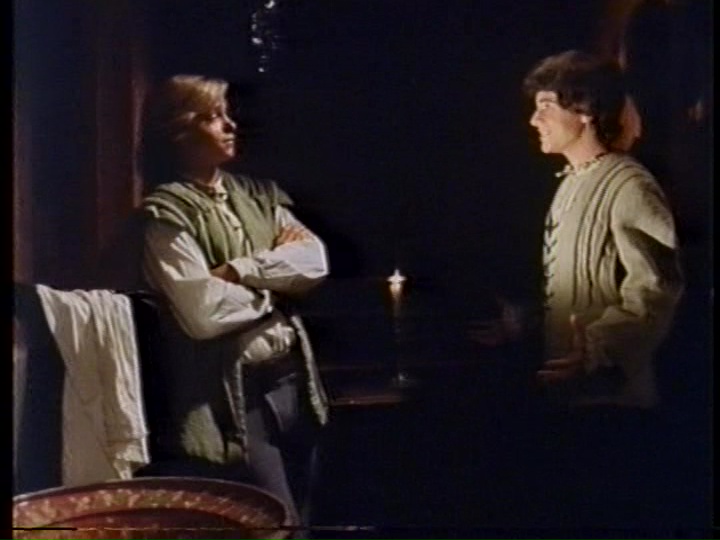
No. 44, the Mysterious Stranger (1982)


This one is really funny to me, because the movie itself starts with an exposition scroll telling you about the difference between the fraud version of the story and the newly published correct eddition. The movie applauds itself as one of the first tellings of this new accurate story.

It's also funny to me because they've added in a second layer of narrative. August now works in a print shop circa Mark Twain's lifetime. We even see a river with a paddleboat! When he stops to wonder what it would have been like to work in a print shop when the printing press was recently invented, that is when we get a dream sequence flashback of sorts which takes over the rest of the movie. This is just very strange, and I don't know who or why this decision was made. Was it to make the movie more clearly a "Mark Twain movie"? Or to water down the "nothing is real" message at the end by making the whole thing a dream?

The movie is much simpler than the book, obviously, and it spends a lot more time on the magician character and his interactions with the Frau. Likely because he was played by Fred Gwynne, a well-known actor who may have gotten extended scenes to justify his part. It goes through the Invisibles and the Duplicates, but ends their arc short and skips to when the Sorcerer (secretly 44) is to be burned at the stake. At that point, 44 makes it all dissapear and him and August have a version of the final conversation, before the dream fades and August is back in his "present time". The side tangents of the artist, the madwoman, traveling across the world, and the undead party are not here (for good reason) but enough of 44 and August's conversations are preserved to still have a fun time with their banter.

They filmed in a real castle, and wherever they could made it as period accurate as possible. Accurately to the book, there are a lot of scenes where every single printworker is in the background, and so every single scene needs to set up that there's like 12 men crammed into the tiny castle rooms. The casting is perfect, I can tell who every side character is easily. The effects are so so silly.

This movie is so funny and gay and I love it. I would reccomend it, but it is 80% the slowest educational period movie you have ever seen where they argue about printmaking and union strikes, and only 20% funny gays.

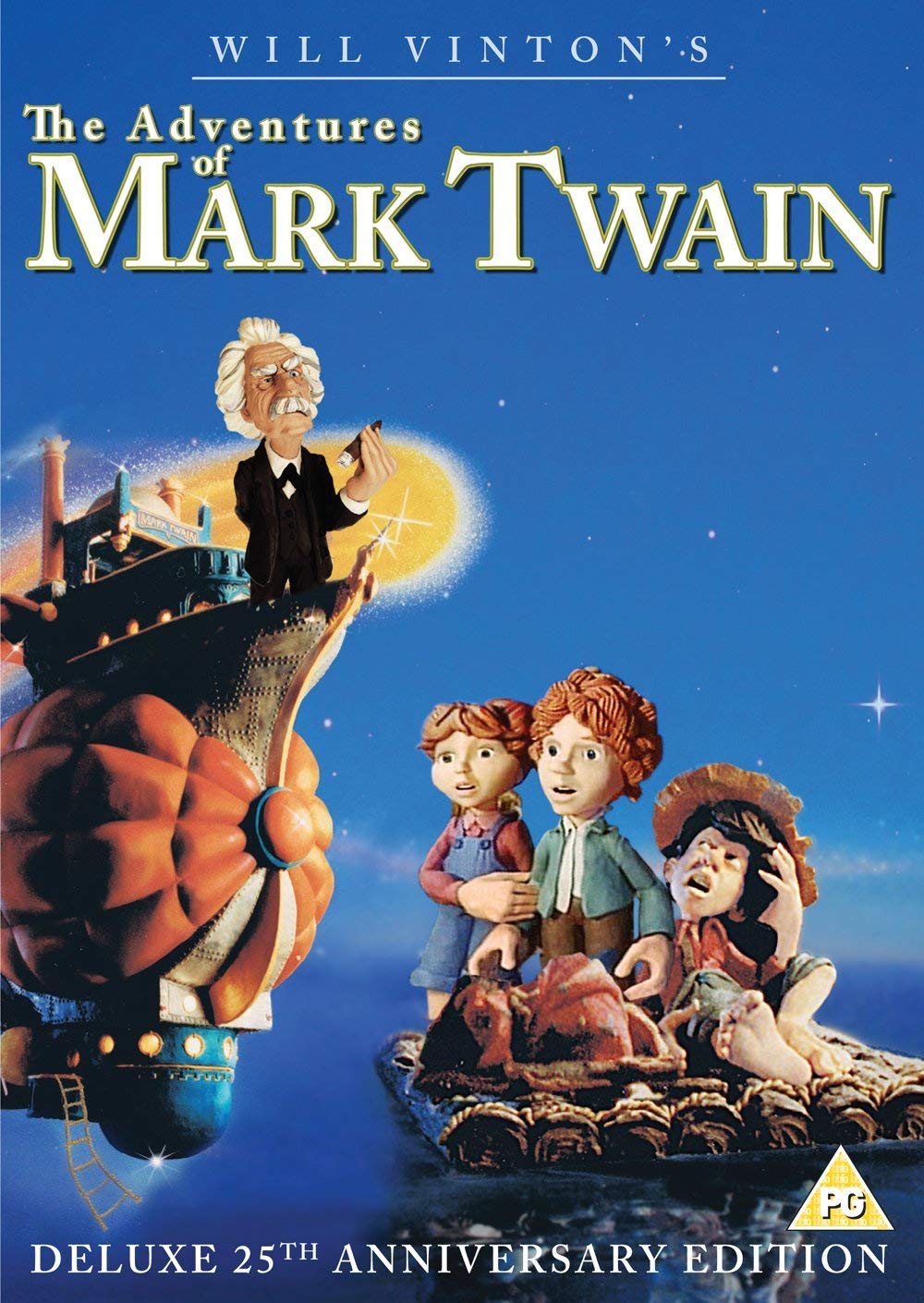
The Adventures of Mark Twain (1985)

I love this movie it's a beautiful movie and deserves so much more love. The only full-length movie that Will Vinton Studios ever made.

Lets get one thing straight, this was never intended to be a kid's movie. It was made for a family audience, with most of the themes aimed towards adults. Having seen the movie multiple times I'm pretty sure young kids would be bored out of their mind with Diaries of Adam and Eve or the parents would have turned off the movie at the aliens making out in Captain Stormcloud long before they got to the Mysterious Stranger scene. According to Vinton himself in the interview linked above, it was advertised and distributed as a kid's movie, they tried to fight it, and it ultimately killed it. How many times have we heard that one?

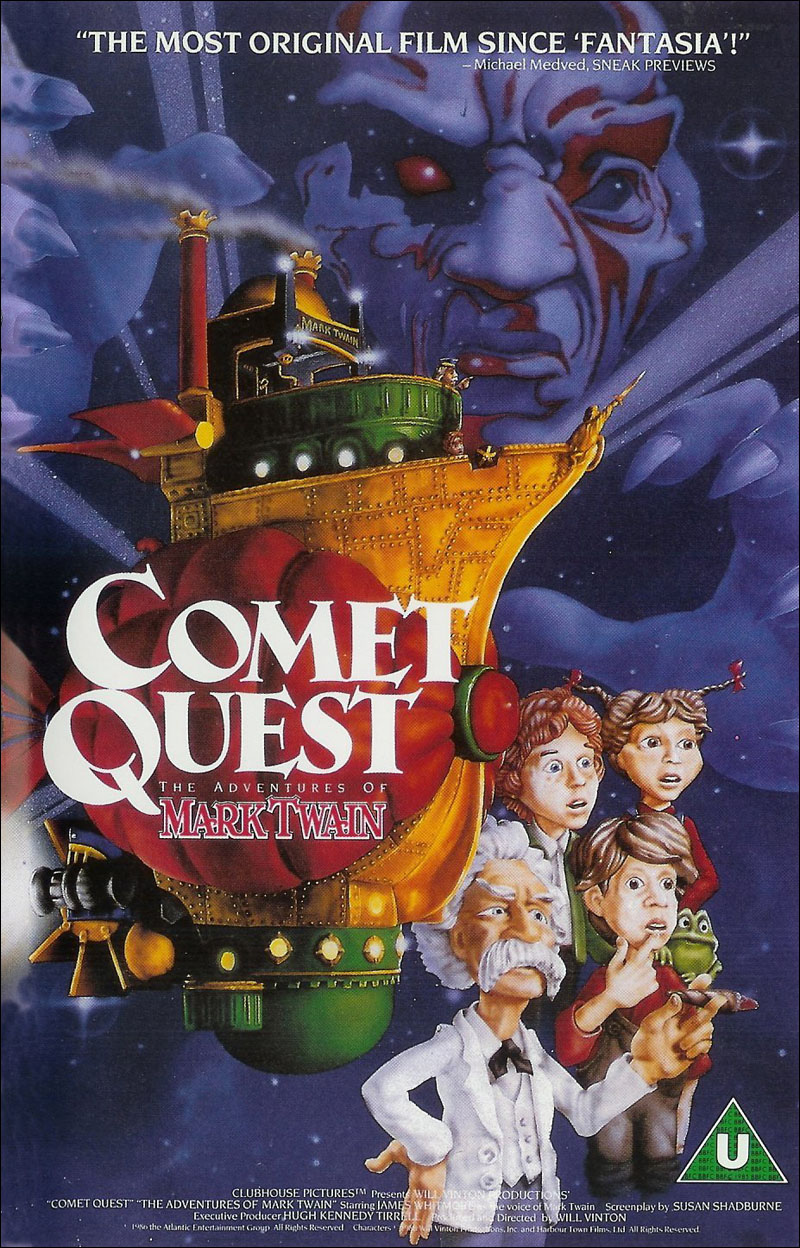
Overseas it was marketed as "Comet Quest" with the SICKEST poster imaginable.

I have a personal connection to this movie!

When the Claydream documentary came out, I had the chance to see a premiere with a Q&A afterward. In attendance were many people who worked with Vinton, and after the showing I began talking to Michele Mariana, who voiced Becky Thatcher and others. I had one specific question for her. In the credits, she is credited as being the voice of the Stranger, and I had found elsewhere online unconfirmed claims that Will Vinton himself did the other voice of the Stranger (it is clearly a man and woman talking in unison). In the credits though, this is attributed to "Wilbur Vincent". Aka "definitely not Will Vinton".

So that's what I asked, was that- and the other suspicious credits Wally Newman (Captain Stormfield), Wilf Innton (Dan'l Webster), and Billy Victor (God)- really Vinton as diferent aliases? And she said the Stranger was definitely him, and the alias thing sounded like something they would have done. So my theory was confirmed from the source!

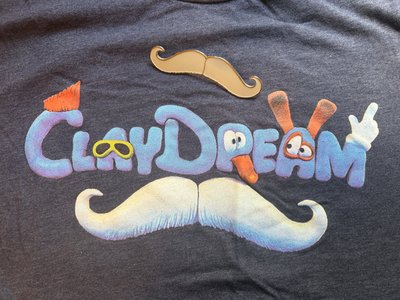
Here's my special Claydream Will Vinton mustache pin (which was free with my ticket) and shirt (which was not) as proof:

Filipp Traum (1989)

Original language: Филипп Траум (1989)

  • Imdb page
  • archived in the Bain Graffy Film Collection, School of Slavonic and East European Studies, University College London.

I can't see this one!!! I haven't seen this one!!! >:0

I feel crazy whenever I try to describe how funny this book is to people, because it's written in the 1900's and the style is a little hard to read. But trust me this book is funny.


“You don’t seem to think much of the human race; it’s a pity you have to belong to it.”
He looked a moment or two upon me, apparently in gentle wonder, then answered—
“What makes you think I belong to it?”
The bland audacity of it so mixed my emotions that it was a question which would get first expression, anger or mirth; but mirth got precedence, and I laughed. Expecting him to laugh, too, in response; but he did not. He looked a little hurt at my levity, and said, as in mild reproach—
“I think the human race is well enough, in its way, all things considered, but surely, August, I have never intimated that I belonged to it. Reflect. Now have I?”
It was difficult to know what to say; I seemed to be a little stunned. Presently I said, wonderingly—
“It makes me dizzy; I don’t quite know where I am; it is as if I had had a knock on the head. I have had no such confusing and bewildering and catastrophical experience as this before. It is a new and strange and fearful idea: a person who is a person and yet not a human being. I cannot grasp it, I do not know how it can be, I have never dreamed of so tremendous a thing, so amazing a thing! Since you are not a human being, what are you?”
“Ah,” he said, “now we have arrived at a point where words are useless; words cannot even convey human thought capably, and they can do nothing at all with thoughts whose realm and orbit are outside the human solar system, so to speak. I will use the language of my country, where words are not known. During half a moment my spirit shall speak to yours and tell you something about me. Not much, for it is not much of me that you would be able to understand, with your limited human mentality.”
While he was speaking, my head was illuminated by a single sudden flash as of lightning, and I recognised that it had conveyed to me some knowledge of him; enough to fill me with awe. Envy, too—I do not mind confessing it. He continued—
“Now then, things which have puzzled you heretofore are not a mystery to you any more, for you are now aware that there is nothing I cannot do—and lay it on the magician and increase his reputation; and you are also now aware that the difference between a human being and me is as the difference between a drop of water and the sea, a rushlight and the sun, the difference between the infinitely trivial and the infinitely sublime! I say—we’ll be comrades, and have scandalous good times!” and he slapped me on the shoulder, and his face was all alight with good-fellowship.
I said I was in awe of him, and was more moved to pay him reverence than to—
“Reverence!” he mocked; “put it away; the sun doesn’t care for the rushlight’s reverence, put it away. Come, we’ll be boys together and comrades! Is it agreed?


He closed the door, and we sat down and began to talk, and he said it was good and generous of me to come and see him, and he hoped I would be his friend, for he was lonely and so wanted companionship. His words made me ashamed—so ashamed, and I felt so shabby and mean, that I almost had courage enough to come out and tell him how ignoble my errand was and how selfish. He smiled most kindly and winningly, and put out his hand and patted me on the knee, and said,
“Don’t mind it.”
I did not know what he was referring to, but the remark puzzled me, and so, in order not to let on, I thought I would throw out an observation—anything that came into my head; but nothing came but the weather, so I was dumb. He said,
“Do you care for it?”
“Care for what?”
“The weather.”
I was puzzled again; in fact astonished; and said to myself “This is uncanny; I’m afraid of him.”
He said cheerfully,
“Oh, you needn’t be. Don’t you be uneasy on my account.”


Then he said, with delicate consideration for me, “Treat me just as usual when others are around; it would injure you to befriend me in public, and I shall understand and not feel hurt.”
“You are just lovely!” I said, “and I honor you, and would brave them all if I had been born with any spirit—which I wasn’t.”
He opened his big wondering eyes upon me and said,
“Why do you reproach yourself? You did not make yourself; how then are you to blame?”


I was shocked, and deeply concerned; for I felt rising in me with urgency a suspicion which had troubled me several times before, but which I had ungently put from me each time—that he was indifferent to religion. I questioned him—he confessed it! I leave my distress and consternation to be imagined, I cannot describe them.
In that paralysing moment my life changed, and I was a different being; I resolved to devote my life, with all the affections and forces and talents which God had given me to the rescuing of this endangered soul. Then all my spirit was invaded and suffused with a blessed feeling, a divine sensation, which I recognized as the approval of God. I knew by that sign, as surely as if He had spoken to me, that I was His appointed instrument for this great work. I knew that He would help me in it; I knew that whenever I should need light and leading I could seek it in prayer, and have it; I knew—
“I get the idea,” said 44, breaking lightly in upon my thought, “it will be a Firm, with its headquarters up there and its hindquarters down here. There’s a duplicate of it in every congregation—in every family, in fact. Wherever you find a warty little devotee who isn’t in partnership with God—as he thinks—on a speculation to save some little warty soul that’s no more worth saving than his own, stuff him and put him in the museum, it is where he belongs.”


He came and sat down by me and rested his hand on my knee in his winning way, and smiled his beautiful smile, and asked me how I liked it. It was so evident that he was expecting a compliment, that I was obliged to furnish it. I had not the heart to hurt him, and he so innocently proud of his insane exhibition. I could not expose to him how undignified it was, and how degrading, and how difficult it had been for me to stand it through; I forced myself to say it was “ideal—more than ideal;” which was of course a perfectly meaningless phrase, but he was just hungry enough for a compliment to make him think this was one, and also make him overlook what was going on in my mind; so his face was fairly radiant with thanks and happiness, and he impulsively hugged me and said—
“It’s lovely of you to like it so. I’ll do it again!”
And at it he went, God assoil him, like a tempest. I couldn’t say anything, it was my own fault. Yet I was not really to blame, for I could not foresee that he would take that uninflamed compliment for an invitation to do the fiendish orgy over again. He kept it up and kept it up until my heart was broken and all my body and spirit so worn and tired and desperate that I could not hold in any longer, I had to speak out and beg him to stop, and not tire himself so. It was another mistake; damnation, he thought I was suffering on his account! so he piped out cheerily, as he whizzed by—
“Don’t worry about me; sit right where you are and enjoy it, I can do it all night.”
I thought I would go out and find a good place to die, and was starting.


I do wish you would become a Christian; won’t you try?”
He shook his head, and said—
“I should be too lonesome.”
“Lonesome? How?”
“I should be the only one.”


“Canvas-back,” he said, “hot from America!”
“What is America?”
“It’s a country.”
“A country?”
“Yes.”
“Where?”
“Oh, away off. It hasn’t been discovered yet. Not quite. Next fall.”
“Have you—”
“Been there? Yes; in the past, in the present, in the future. You should see it four or five centuries from now!"


“No, it is only a vice, merely a vice, but not a religious one. It originated in Mexico.”
“What is Mexico?”
“It’s a country.”
“A country?”
“Yes.”
“Where is it?”
“Away off. It hasn’t been discovered yet.”
“Have you ever—”
“Been there? Yes, many times. In the past, in the present, and in the future."